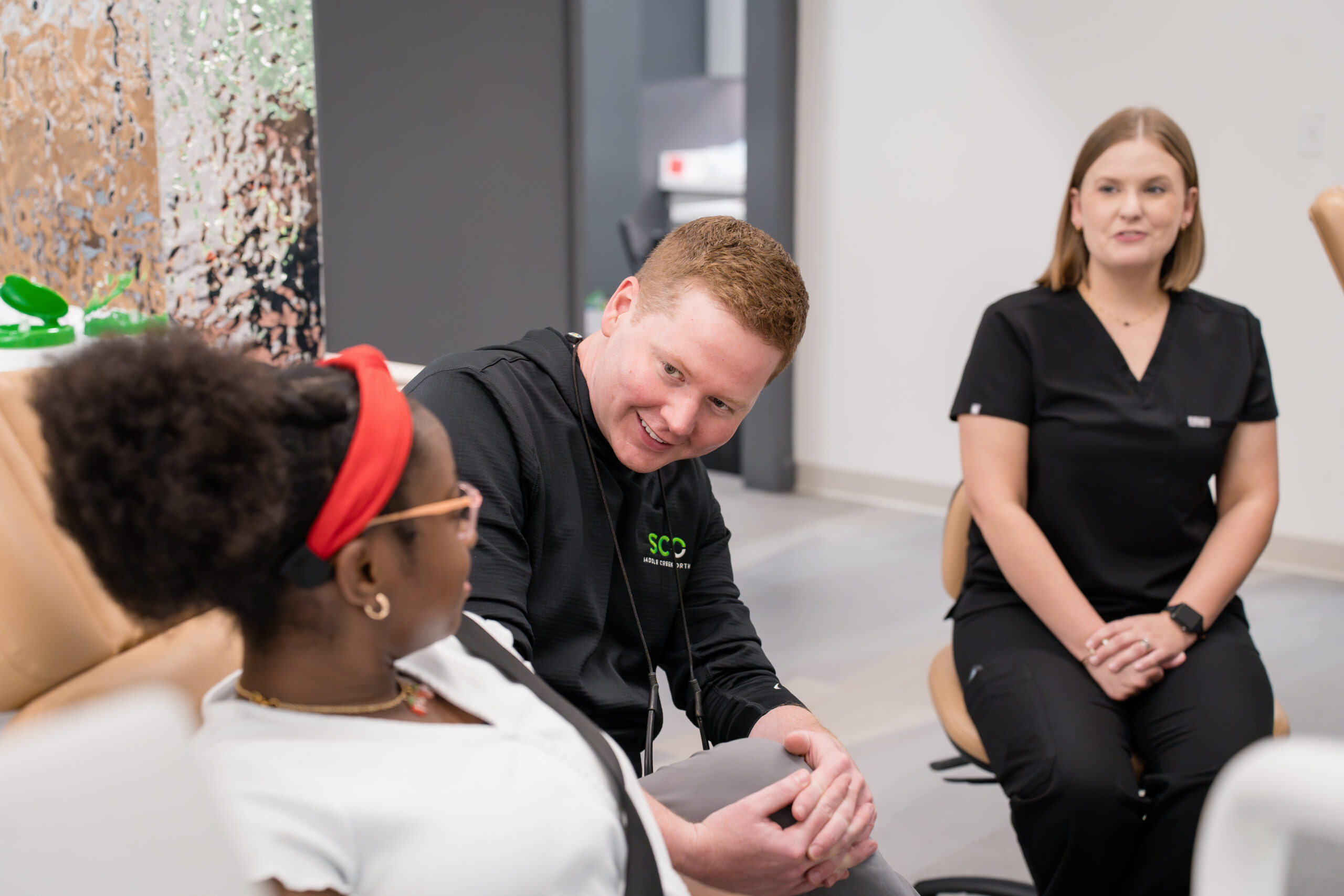
It’s one of the first questions every patient asks, and it’s a fair one. Most people wear braces for somewhere between 18 and 30 months, though plenty of cases finish sooner and a few take longer. The exact timeline depends on what your teeth need to do, how your bite fits together, and how well things like elastics and appointments stay on track.
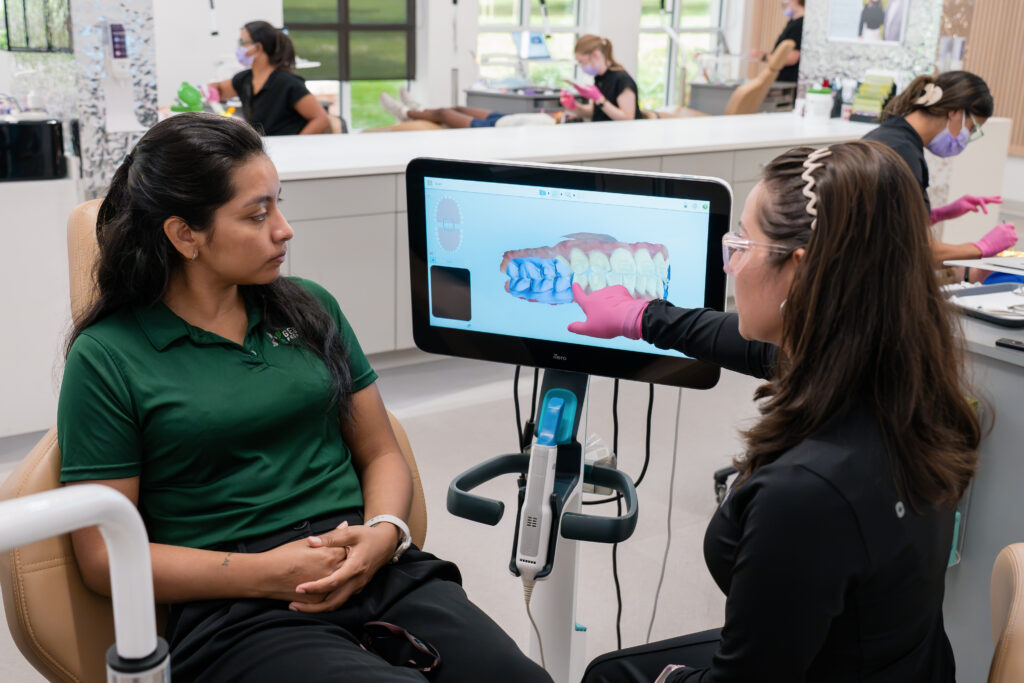
Here’s a realistic look at how long braces take, what affects the timeline, and what you can do to help treatment finish on schedule.
The Short Answer
- Mild crowding or spacing: often around 12 to 18 months
- Moderate crowding or bite correction: usually 18 to 24 months
- Complex bite problems: 24 to 30 months, sometimes longer
- Early (Phase 1) treatment for kids: typically 6 to 12 months
Your orthodontist can give you a much more specific estimate after looking at your teeth, X-rays and bite at your consultation.
Why Braces Take Months, Not Weeks
Teeth don’t just slide through the gums. When braces put light, steady pressure on a tooth, the bone around the root slowly breaks down on one side and rebuilds on the other. That remodeling is what lets the tooth move safely, and it can’t be rushed without risking the roots and gums. Gentle and steady wins here.
Treatment also usually happens in stages: first lining up the teeth, then correcting the bite, then fine-tuning the details so everything fits together. Each stage builds on the one before it.
What Affects How Long Braces Take
The type of problem
Closing a small gap is a much shorter job than correcting an overbite, underbite or crossbite. Bite corrections involve moving groups of teeth and sometimes guiding jaw position, which adds time. You can see the kinds of problems we treat on our Memphis orthodontics page.
Age
Kids and teens are still growing, which can make some bite corrections easier because we can work with that growth. Adult teeth move just as well, but bone is denser, so some movements take a little longer. Adults still get great results, it’s just a matter of planning around it.
Wearing elastics as directed
Rubber bands are the engine behind most bite corrections. Wearing them as prescribed, every day, is one of the biggest factors in finishing on time. Skipping them is the most common reason treatment runs long.
Broken brackets and missed visits
A loose bracket stops that tooth from moving until it’s fixed, and a missed adjustment can push the schedule back several weeks. Avoiding hard and sticky foods and keeping your appointments makes a real difference. Here’s a handy list of what you can eat with braces.
Oral hygiene
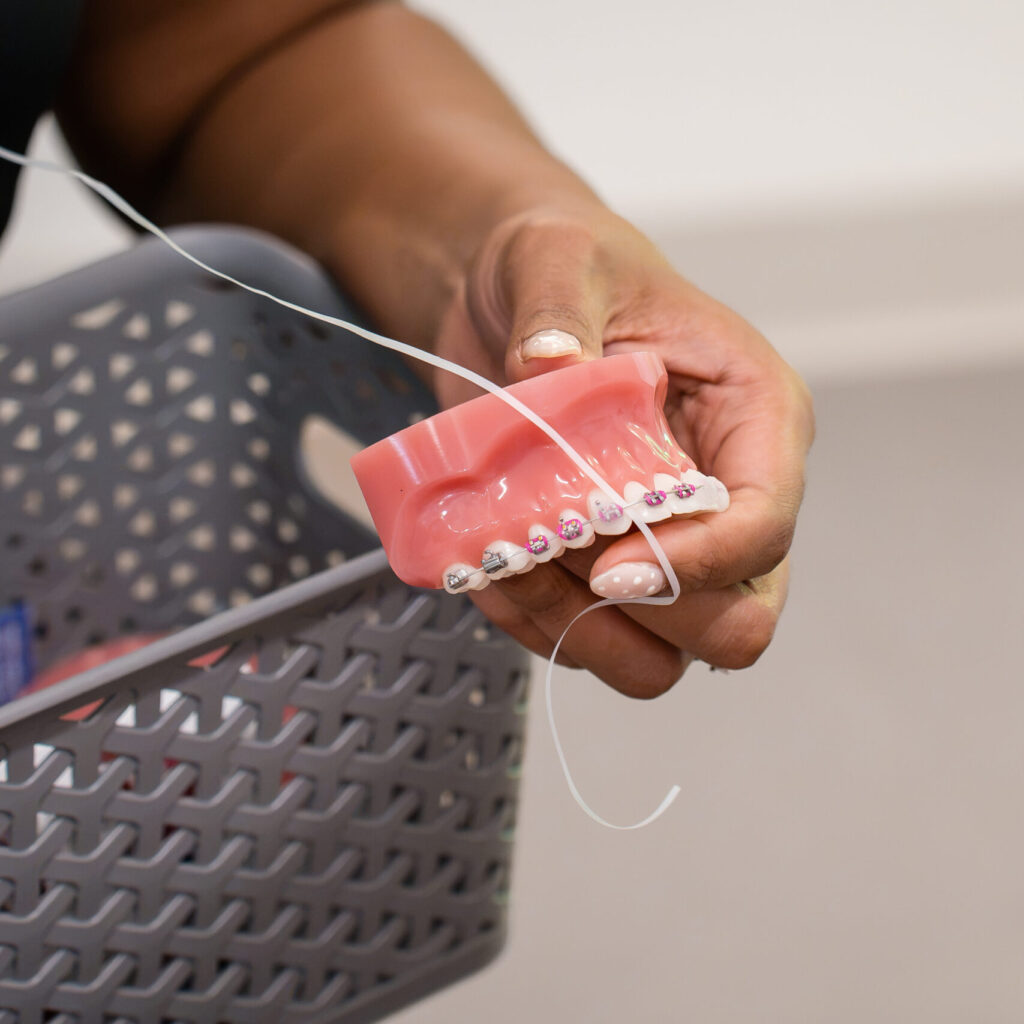
Swollen, irritated gums slow tooth movement. Brushing after meals and flossing daily keeps gums healthy so teeth can move efficiently.
Metal vs. Clear Braces: Is One Faster?
Not really. Metal braces and clear ceramic braces move teeth the same way, so timelines are similar for the same case. Ceramic brackets are a little more brittle, so we’re careful with them in cases that need heavy bite correction, but for most patients the choice comes down to appearance, not speed.
Braces vs. Clear Aligners
For mild to moderate cases, clear aligners like Clarity Aligners can finish in a similar time frame, sometimes 12 to 18 months. The catch is wear time. Aligners only work when they’re in, so they need to be worn 20 to 22 hours a day. For complex bite problems, or for younger patients who may forget their trays, braces are often the more predictable route.
A Typical Braces Timeline
- Consultation: Records, an exam and your treatment plan. Many patients can start the same day.
- Placement: Braces go on in about an hour. Teeth feel sore for a few days. Our first week in braces tips help with that.
- Alignment (first several months): Crowded and rotated teeth start lining up. This is usually when you see the biggest visible change.
- Bite correction (middle months): Elastics and wire changes bring the upper and lower teeth into the right relationship.
- Finishing (last few months): Small adjustments to get every tooth just right.
- Braces off and retainers on: Retainers hold everything in place while the bone around your teeth settles.
Most adjustment visits happen every six to eight weeks and are quick, so treatment fits around school and work better than most people expect.

What Happens After Braces Come Off
Getting braces off isn’t the finish line, it’s the start of keeping your results. Teeth naturally want to drift back, especially in the first year. Wearing retainers as directed is the single best way to protect the time and effort you put into treatment. Our guide to everything you need to know about retainers covers the details.
Can Starting Early Shorten Treatment?
Sometimes. The American Association of Orthodontists recommends a first orthodontic checkup by age 7. Most kids don’t need treatment at that age, but when there’s a jaw growth issue or a crossbite, a short early phase can make later treatment simpler and shorter. Our article on when your child should see an orthodontist explains what we look for.
Why Your Orthodontist’s Experience Matters
A well-planned case moves more efficiently. Orthodontists complete years of specialty training after dental school focused only on tooth movement and bite correction, which helps avoid detours that add months to treatment. If you’re curious about that training, here’s a breakdown of the difference between an orthodontist and a dentist.
At Saddle Creek Orthodontics, both of our doctors are board-certified orthodontists, and you’ll see the same doctor at every visit. If you’re looking for braces in Memphis, our Germantown and Collierville offices make it easy to keep appointments on track, and you can learn more about our board-certified Memphis-area orthodontists before your visit.
Frequently Asked Questions
How long do braces usually take?
Most people wear braces for about 18 to 30 months. Mild cases can finish in around a year, while complex bite corrections can take longer. Your orthodontist will give you a specific estimate at your consultation.
Can braces work in 6 months?
Very minor cosmetic changes to the front teeth can sometimes be done quickly, but most cases need more time to correct the bite properly. Rushing tooth movement can risk the roots and gums and lead to results that don’t last.
Do adults take longer to finish braces?
Adult treatment can take a little longer for some movements because adult bone is denser, but adults get excellent results. Many adult cases finish in a similar time frame to teens.
What makes braces take longer than planned?
The most common reasons are not wearing elastics as directed, broken brackets, missed appointments and gum inflammation from plaque buildup.
Are clear aligners faster than braces?
For mild to moderate cases, aligners can take a similar amount of time as braces, as long as they’re worn 20 to 22 hours a day. For complex bite problems, braces are often more predictable.
Find Out Your Timeline
The only way to know how long treatment would take for you or your child is a quick exam. Book a free consultation at our Germantown or Collierville office, and we’ll give you a clear, honest estimate.