
Most parents in Collierville know their child will probably need orthodontic treatment at some point, but very few know when the first orthodontic visit should actually happen. The answer usually surprises people. The American Association of Orthodontists recommends every child have their first orthodontic evaluation by age 7, well before most parents would ever think to schedule one. This guide walks through why that early visit matters, what to expect, and how to know when treatment should actually begin.
The Short Answer: By Age 7
The American Association of Orthodontists recommends an initial orthodontic screening by age 7. That might sound early. Most parents associate orthodontic treatment with middle school or early high school, when teeth are fully grown in and obvious alignment issues are easy to see.
The reason for the age 7 recommendation is simple: by that age, enough permanent teeth have come in and enough jaw development has happened that an experienced orthodontist can spot problems before they become bigger issues. Most 7-year-olds do not need treatment right away. But identifying potential issues early gives families options and often saves time, money, and stress later.
What Happens at an Early Orthodontic Visit?
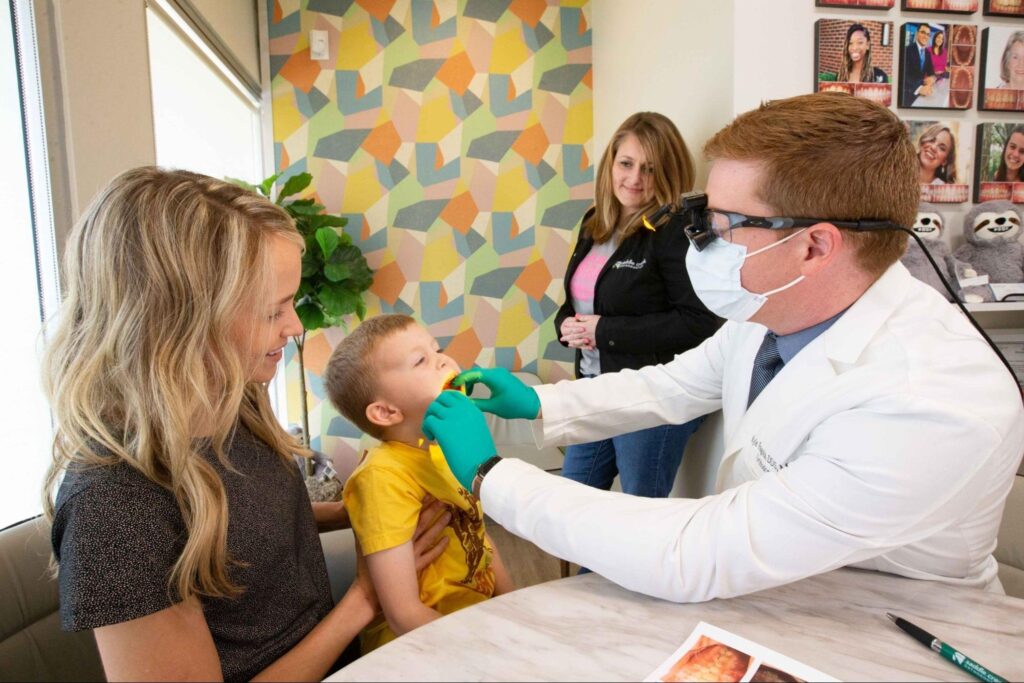
A first orthodontic visit for a young child at our Collierville office is quick, comfortable, and entirely non-invasive. Here is what to expect:
A clinical exam. The orthodontist looks at the teeth that have come in, the teeth still developing, the bite, the jaw, and how everything fits together.
Digital imaging. If needed, we take a panoramic x-ray and 3D digital scan. This step is painless and takes just a few minutes.
A growth assessment. Orthodontists can predict a lot from early imaging and examination. We look at how the jaw is developing, whether there is room for permanent teeth to come in, and whether any habits (thumb sucking, tongue thrusting) might be affecting development.
A clear recommendation. Most kids leave their first visit with one of three outcomes:
- No treatment needed, come back in 12 months. This is the most common outcome at age 7. Everything looks good, and we just want to monitor growth.
- Early (Phase 1) treatment recommended. Some kids benefit from early intervention to guide jaw growth, make space for permanent teeth, or correct a developing bite issue.
- Treatment recommended later. Some issues are better addressed once more permanent teeth have come in, usually around ages 10 to 13. We monitor until then.
The visit is free, and there is no pressure to commit to anything. You leave with information and a plan.
Signs Your Child Might Need an Orthodontic Evaluation
While every child should see an orthodontist by age 7, there are specific signs that warrant an earlier visit or make the age 7 appointment especially important:
- Early or late loss of baby teeth. Baby teeth that fall out too early or linger too long can affect the development of permanent teeth.
- Difficulty chewing or biting. A child who struggles with normal eating may have a bite issue.
- Mouth breathing. Chronic mouth breathing can be a sign of jaw development issues that are easier to address early.
- Thumb sucking past age 5 or 6. Extended thumb sucking can affect the shape of the jaw and the alignment of front teeth.
- Speech issues. Some speech problems are related to tongue position or jaw alignment.
- Teeth that do not meet properly. If the upper and lower teeth do not come together evenly, a bite issue may be developing.
- Crowded or blocked teeth. Permanent teeth coming in crooked or blocked from erupting at all.
- Jaw that shifts when closing. A lower jaw that shifts to one side when biting may indicate a crossbite.
- Protruding front teeth. Upper front teeth that stick out significantly are more prone to injury and often benefit from early treatment.
If you notice any of these, schedule an evaluation. There is no downside to getting an expert opinion early.
Phase 1 Treatment: Does Your Child Actually Need It?
“Phase 1” treatment, also called early or interceptive treatment, refers to orthodontic work done while a child still has a mix of baby and permanent teeth, usually between ages 7 and 10. It is typically followed by a second phase of treatment a few years later once all permanent teeth have come in.
Not every child needs Phase 1 treatment. In fact, most do not. The cases where it provides real benefit include:
Jaw development issues. When a child’s upper jaw is too narrow or the lower jaw is growing in a way that creates an underbite, early treatment can guide growth in ways that are impossible once the child is fully grown.
Severe crowding. If permanent teeth clearly do not have room to come in, creating space early can prevent more invasive treatment later.
Significant overbites or protruding teeth. Kids with significantly protruding upper teeth are at higher risk of injury. Early treatment can reduce that risk and improve aesthetics during a self-conscious age.
Crossbites. A crossbite causes the lower jaw to shift when biting, which can lead to asymmetric jaw growth over time. Early correction prevents this.
Harmful habits. In some cases, appliances are used to help end thumb sucking, tongue thrusting, or other habits that are affecting development.
If your child does not need Phase 1, that is great news. Most kids simply wait until all permanent teeth have come in (usually around ages 11 to 13) and then do a single, shorter phase of comprehensive treatment.

Most Kids Start Comprehensive Treatment Between Ages 10 and 14
For the majority of kids, the primary orthodontic treatment happens between ages 10 and 14. This is the sweet spot when most permanent teeth have come in but the jaw is still growing and responsive to treatment. Treatment at this age is typically faster and more predictable than treatment done in adulthood.
Common treatment options at this stage include:
- Traditional metal braces. Still the most popular option for kids and teens. Modern brackets are smaller and more comfortable, and kids often enjoy picking colors for their elastics.
- Ceramic braces. A slightly more discreet option for older teens who want fixed braces without the obvious metal look.
- Invisalign Teen. Clear aligner treatment for responsible teens who can commit to wearing the trays 20 to 22 hours a day.
Your orthodontist will recommend the option that works best for your child’s case, personality, and daily life.
Why Early Evaluation Matters (Even When No Treatment Is Needed)
Even if your child does not need treatment at age 7, the early visit still has real value:
It sets a baseline. Your orthodontist documents how your child’s teeth and jaw are developing, making it easier to spot changes over time.
It builds familiarity. Kids who visit the orthodontist early and have positive experiences are much more comfortable when treatment eventually begins.
It provides peace of mind. Many parents come in worried about crowding or a developing bite issue, only to learn that everything is progressing normally. That reassurance is worth a lot.
It catches subtle issues. Sometimes the orthodontist spots something the parent and family dentist have not noticed, leading to early intervention that prevents bigger problems.
What About Teens Who Have Never Seen an Orthodontist?
Plenty of Collierville teens come in for their first orthodontic visit at age 13 or 14 without ever having been seen earlier. That is completely fine. Teens still have plenty of growth left, and treatment at that age is highly effective. We simply start with a full evaluation and go from there.
The one thing to avoid is waiting so long that subtle issues become significant ones. If your teen has not been evaluated and you are wondering whether they should be, schedule a consultation. It costs nothing, and you leave with clarity.
Finding the Right Orthodontist for Your Child in Collierville
A few things to look for when choosing an orthodontist for your child:
Board certification. Only 30% of practicing orthodontists are board certified. It is the clearest signal that a doctor holds themselves to a higher standard.
Experience with kids and teens. An orthodontist who regularly treats younger patients will have a practice built around making the experience fun and comfortable, not intimidating.
A team that communicates well. Orthodontic treatment involves many visits. You want a practice where your child feels comfortable and you feel kept in the loop.
Flexible scheduling. Practices that offer early morning and after-school appointments make it much easier to keep treatment on track without disrupting school.
Transparent pricing. Clear cost breakdowns, interest-free payment plans, and no hidden fees should be standard.

Why Collierville Families Trust Saddle Creek Orthodontics
At Saddle Creek Orthodontics, we have spent years building a practice that works well for Collierville families. Our team is led by two board certified orthodontists, Dr. Kyle Fagala and Dr. John Boling, both of whom regularly treat kids and teens from ages 7 through 18.
We make every visit welcoming. Our team greets kids by name, explains each step in a way that makes sense at their age, and never rushes families through appointments. Parents tell us that their kids actually look forward to orthodontic visits, which is not something every practice can say.
Ready to Schedule Your Child’s First Visit?
If your child is approaching age 7, or if you have noticed any of the signs discussed above, the best next step is a free consultation. Our Collierville office makes it easy to get answers without pressure.
Schedule your free consultation with Saddle Creek Orthodontics today. We look forward to meeting your family.