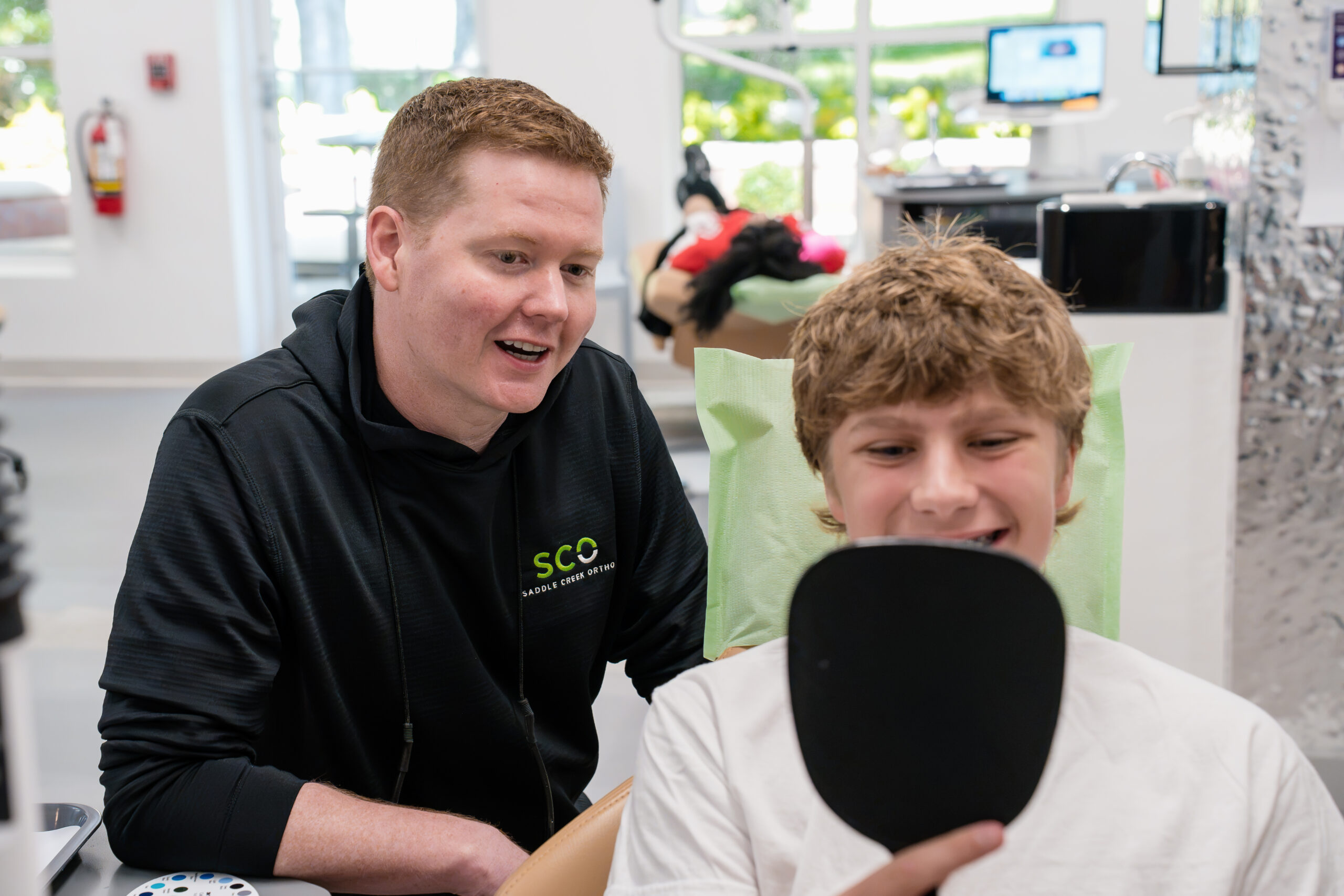
An orthodontist is a dentist who went back to school. After finishing four years of dental school, an orthodontist completes an additional two to three years of full-time residency training focused only on straightening teeth, correcting bites and guiding jaw growth. A general dentist focuses on the overall health of your teeth and gums: cleanings, fillings, crowns and preventive care. Both are important. They just do different jobs.
That difference matters more than it used to. Plenty of general dental offices now offer clear aligners, and it’s not always obvious who’s best suited to straighten your teeth. Here’s a plain-language breakdown so you can make the right call for your family.
Training: Where the Paths Split
Every orthodontist starts as a dentist. The split happens after dental school.
- General dentist: Four years of dental school after college, earning a DDS or DMD. Dental school includes a small amount of orthodontic coursework.
- Orthodontist: The same four years of dental school, then a competitive two to three year residency in orthodontics and dentofacial orthopedics. Residents spend that time diagnosing and treating real orthodontic cases full time, under the supervision of experienced orthodontists.
On average, only about six out of every hundred dental school graduates go on to become orthodontists. Some go a step further and earn board certification from the American Board of Orthodontics, which requires passing a written exam and presenting treated patient cases to a panel of examiners.

What a Dentist Does
Your general dentist is your home base for oral health. They handle:
- Checkups, cleanings and X-rays
- Fillings, crowns and bridges
- Root canals and extractions
- Gum health and oral cancer screenings
- Whitening and cosmetic bonding
Your dentist is also usually the first person to notice that teeth are crowding or a bite looks off, and many families get their first orthodontic referral from their dentist.
What an Orthodontist Does
Orthodontists focus on how teeth and jaws line up and fit together. They treat:
- Crowded, crooked or gapped teeth
- Overbites, underbites, crossbites and open bites
- Jaw growth concerns in children
- Impacted or blocked-in teeth
- Teeth that shifted after earlier treatment
Orthodontists use braces, clear aligners, palatal expanders, retainers and other appliances. Because it’s all they do, they see a huge number of cases and get very good at predicting how teeth and bones will respond.
Can a Dentist Do Braces or Aligners?
Yes, legally a general dentist can offer braces or clear aligners, and many do. For simple cosmetic cases, that can work out fine. The challenge is that you don’t always know whether a case is simple until a specialist looks at it. Things like jaw position, root angles, bite depth and how teeth will settle after treatment are easy to miss without specialty training.
Here’s where seeing an orthodontist really pays off:
- Bite problems, not just crooked front teeth
- Kids who are still growing, where timing and jaw growth matter
- Cases that need more than one tool, like aligners combined with elastics or an expander
- Adults who had treatment before and saw their teeth shift back
An orthodontist also offers every option, braces and aligners, so the recommendation is based on your case rather than the one system an office happens to carry. If you’re considering mail-order aligners, it’s worth reading why we recommend picking an orthodontist over DTC aligners.
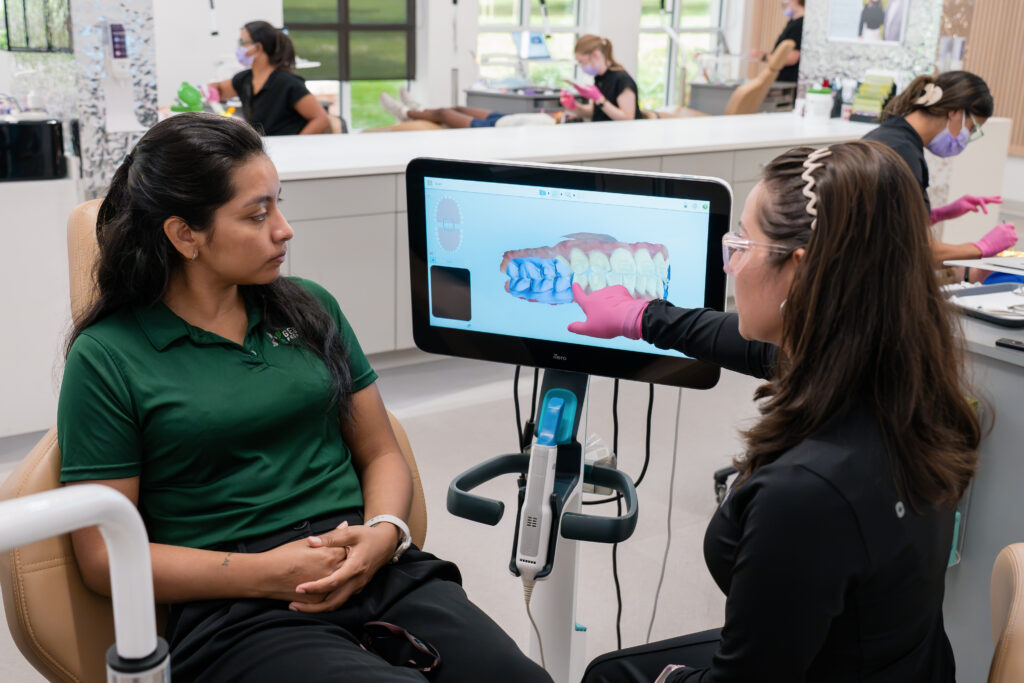
Signs It’s Time to See an Orthodontist
- Crowded, overlapping or widely spaced teeth
- Upper teeth that stick out far past the lower teeth
- Lower teeth that sit in front of the upper teeth
- Teeth that don’t meet when you bite down
- A jaw that shifts or clicks when you chew
- Baby teeth lost very early or very late
- Thumb sucking that continues past age 5 or so
For kids, the American Association of Orthodontists recommends a first orthodontic checkup by age 7, even if nothing looks obviously wrong. Our guide to when your child should see an orthodontist explains what we look for at that first visit.
Do You Need a Referral?
No. You can schedule a consultation with an orthodontist directly. Many families come in on their dentist’s recommendation, but plenty simply call us because something about their child’s smile or their own bite has been on their mind. Either way, we keep your dentist in the loop so everyone’s working from the same plan, and you’ll keep seeing your dentist for cleanings and checkups throughout treatment.
How Dentists and Orthodontists Work Together
The best results come from teamwork. Your dentist keeps your teeth and gums healthy before, during and after orthodontic treatment. Your orthodontist handles the alignment and bite. When braces come off, your dentist may help with any final cosmetic touches like bonding or whitening.
During treatment, regular cleanings are more important than ever, since brackets and aligners make it easier for plaque to build up. We’ll coordinate timing with your dentist when needed.
Choosing an Orthodontist in the Memphis Area
When you’re comparing practices, ask whether the doctor is an orthodontic specialist and board certified, whether you’ll see the same doctor at each visit, and whether they offer both braces and aligners. At Saddle Creek Orthodontics, Dr. Kyle Fagala and Dr. John Boling are both board-certified orthodontists who trained in Memphis, and you’ll see the same doctor every time. Learn more about our board-certified orthodontists serving Memphis, or read about Dr. Kyle, who teaches orthodontic coursework to dental students at the University of Tennessee Health Science Center.
We offer metal braces, clear braces, Clarity Aligners and Invisalign at our Germantown and Collierville offices, and you can see the full range on our orthodontic treatment options page. If you’re wondering how long treatment would take for you or your child, our guide to how long braces take breaks it down.
Frequently Asked Questions
What is the difference between an orthodontist and a dentist?
A dentist focuses on overall oral health, including cleanings, fillings and crowns. An orthodontist is a dentist who completed an additional two to three years of specialty training focused on straightening teeth, correcting bites and guiding jaw growth.
Is an orthodontist a doctor?
Yes. Orthodontists earn a doctoral dental degree (DDS or DMD) and then complete a specialty residency in orthodontics and dentofacial orthopedics.
Should I see a dentist or an orthodontist for clear aligners?
For simple cosmetic cases, some dentists offer aligners. If you have bite concerns, a growing child, or teeth that shifted after earlier treatment, an orthodontist’s specialty training and full range of options usually give you a more predictable result.
Do I need a referral to see an orthodontist?
No. You can book a consultation with an orthodontist directly. Your dentist will still handle your regular cleanings and checkups during treatment.
What does board-certified orthodontist mean?
A board-certified orthodontist has voluntarily passed the American Board of Orthodontics’ written exam and case review process, which goes beyond the specialty license required to practice.
Schedule a Free Consultation
Not sure whether you need an orthodontist? Come find out. Book a free consultation at our Germantown or Collierville office, and we’ll give you an honest answer, even if it’s “not yet.”